


Nesting Box Herbs
Nesting Box Herbs
BackyardChickensMama
Regular price
$19.99 USD
Regular price
$34.99 USD
Sale price
$19.99 USD
Unit price
per
Shipping calculated at checkout.
Couldn't load pickup availability
ON SALE 🌿 BUY ANY 2 HERBAL BLENDS & GET FREE SHIPPING!
SHIPPING: All herbs are packed daily and mailed within 1 business day. Mailed Monday–Saturday.
Nesting Box Herbs Ingredients
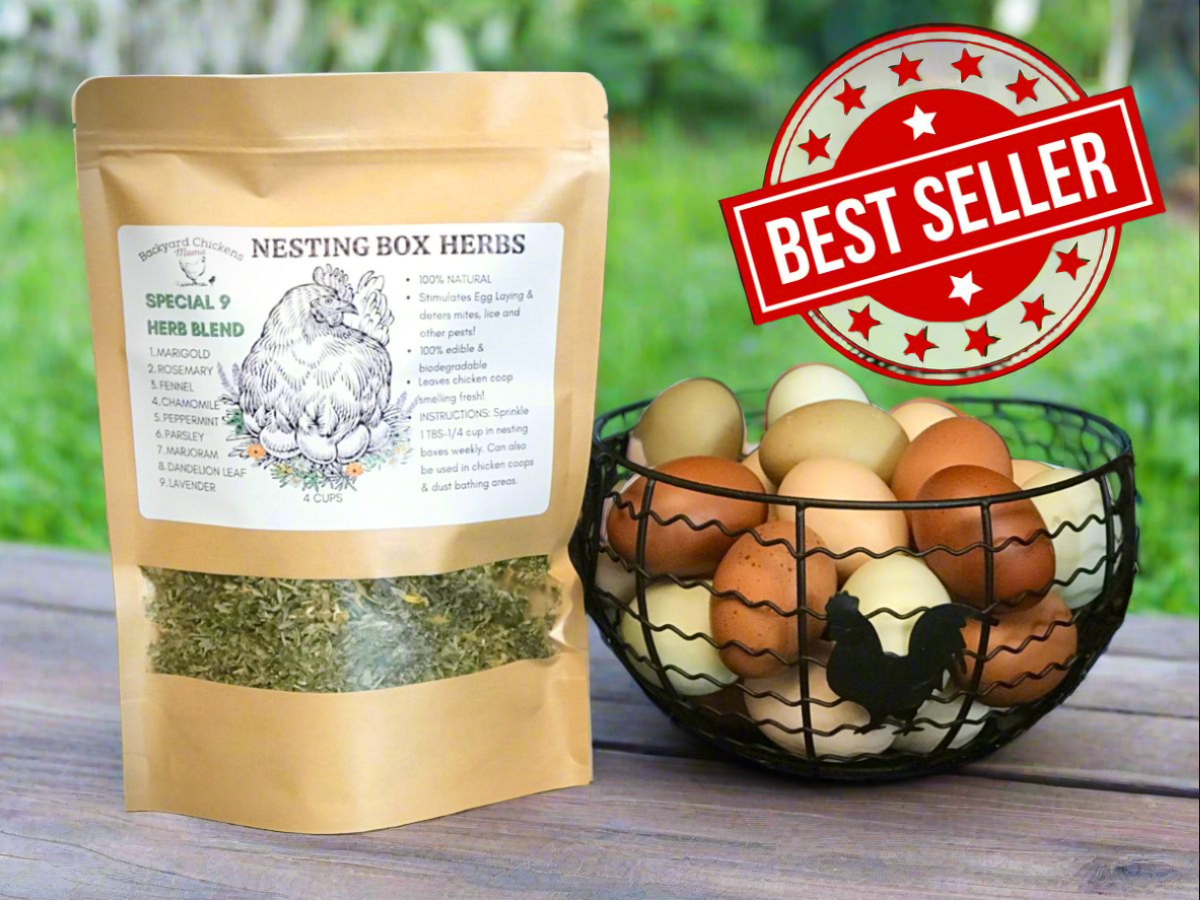
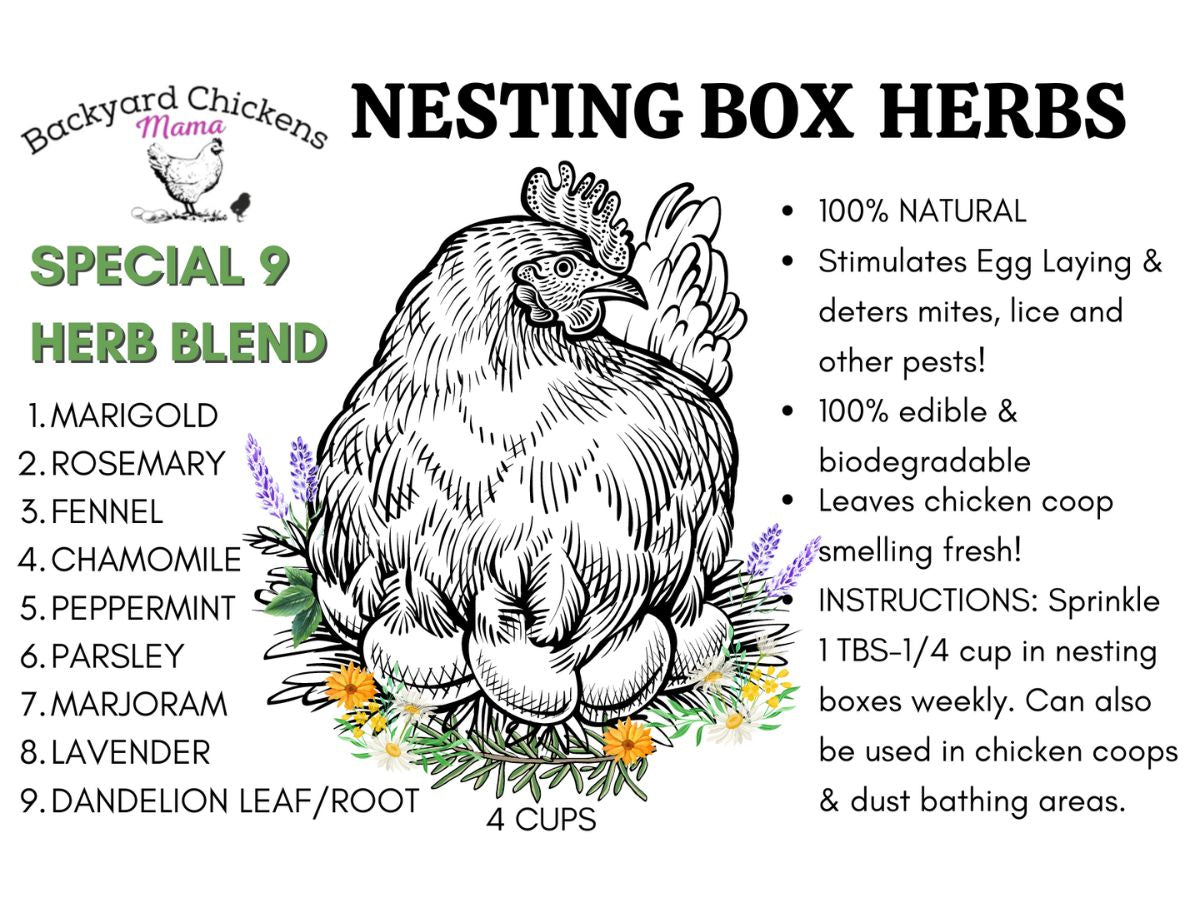
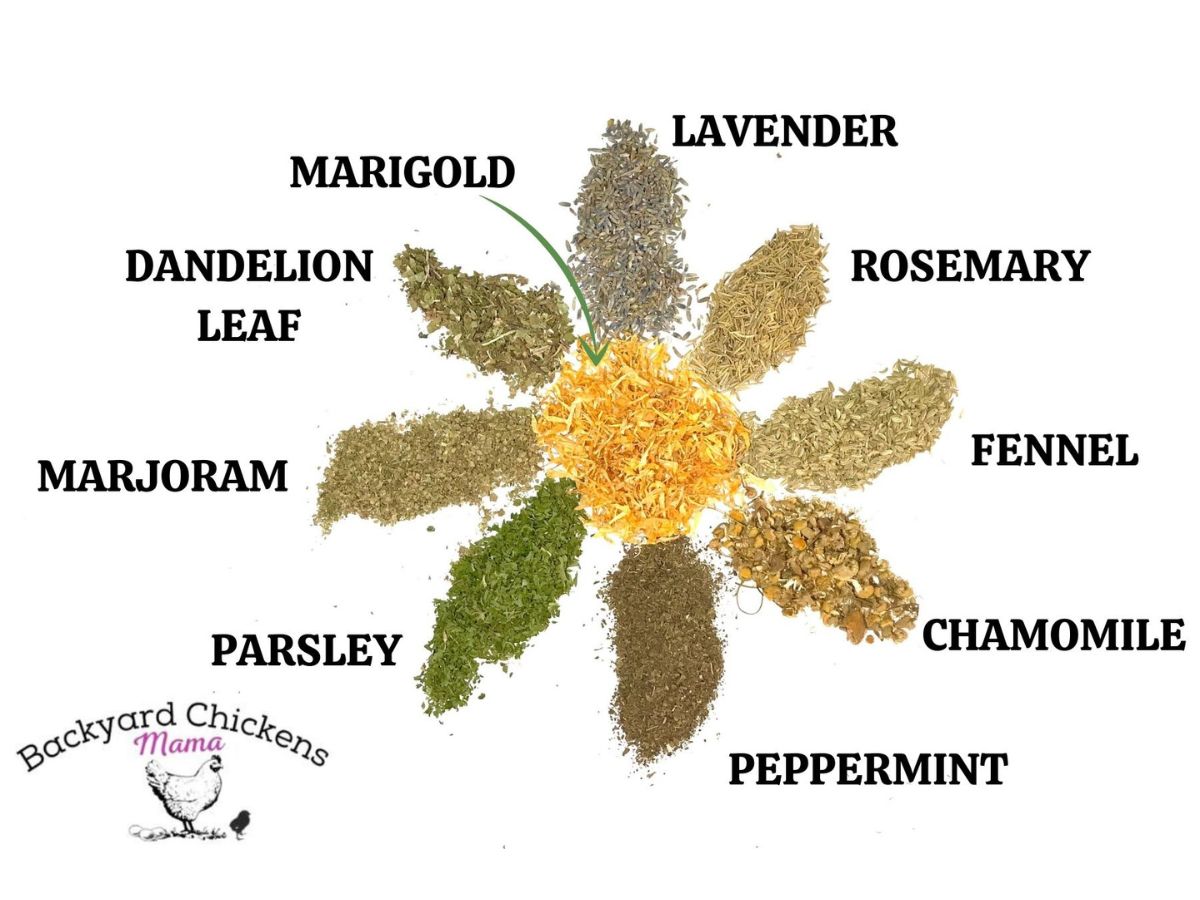
Our special 9-herb Nesting Box Herbs blend is made with natural herbs chicken keepers love using in nesting boxes, bedding, dust bathing areas, and coop routines.
- Marigolds
- Rosemary
- Fennel Seed
- Chamomile
- Peppermint
- Parsley
- Marjoram
- Dandelion Leaf
- Lavender

How to Use Nesting Box Herbs
- Sprinkle 1 tablespoon to 1/4 cup into each nesting box weekly.
- Start with a small amount and gradually increase as needed.
- Sprinkle into dust bathing areas weekly.
- Scatter lightly in coop bedding or run areas as part of your regular coop care routine.
- Add small amounts to feed or steep as an herbal tea when desired.
Details of the 9-Herb Blend
- 100% natural ingredients
- Edible and biodegradable
- Supports cleaner-smelling nesting boxes
- Helps create a calmer nesting environment
- Supports egg-laying routines, flock wellness, and dust bathing areas
1. Marigolds
EGGS
- Supports rich, deeper-colored egg yolks.
- Helps support strong eggshell quality.
- A helpful herb for egg-focused backyard chicken routines.
HEALTH
- Traditionally used for natural wellness support.
- Supports skin, eye, and tissue comfort.
- Contains natural plant compounds valued in herbal care.
DETERRENT
- Often used around coops because many pests dislike the scent.
- Helpful in nesting boxes and coop areas as part of a clean routine.
- Commonly used to discourage flies, mosquitoes, mites, lice, and other unwanted visitors.
AROMA
Marigolds have a musky, lightly sweet herbal scent.
USAGE
- Sprinkle dried marigolds in nesting boxes weekly.
- Scatter lightly in the coop, run, or dust bath area.
- Plant marigolds around the coop perimeter for added seasonal support.
- Add a small amount to feed as part of a varied herbal routine.
2. Rosemary
EGGS
- Supports laying hens with natural herbal nutrition.
- Often used in egg-laying support routines.
- May support overall egg quality as part of a balanced diet.
HEALTH
- Supports respiratory comfort.
- Supports circulation and overall wellness.
- Contains natural antioxidants.
- Traditionally used for digestive support.
DETERRENT
- Commonly used to discourage flies.
- Helpful around coop areas for ants and mosquitoes.
- Strong herbal scent makes it useful in nesting boxes and sachets.
AROMA
Rosemary has a fresh, woodsy scent that becomes stronger as it dries.
USAGE
- Sprinkle dried rosemary into nesting boxes weekly.
- Add to dust bathing areas to freshen the space.
- Use in coop sachets for a clean woodsy aroma.
- Sprinkle a small amount into feed as part of a natural routine.
3. Fennel Seed
EGGS
- Traditionally used to support laying hens.
- Helpful for egg-focused flock care throughout the year.
- Supports reproductive wellness as part of a balanced routine.
HEALTH
- Supports digestive comfort.
- Helpful for occasional bloating or sluggish digestion.
- Contains natural plant compounds valued for wellness support.
- May help support chickens during warm-weather stress routines.
DETERRENT
- Often used in gardens to discourage certain unwanted pests.
- May help discourage flies, aphids, slugs, and snails around outdoor areas.
AROMA
Fennel seed has a slightly sweet black licorice scent.
USAGE
- Sprinkle fennel seed into nesting boxes weekly.
- Add a small amount to feed for digestive support.
- Scatter lightly in dust bathing areas.
4. Chamomile
EGGS
- Supports calm laying routines.
- Helpful for hens that benefit from a more peaceful nesting space.
- Supports eggshell quality as part of a balanced care routine.
HEALTH
- Known for its calming properties.
- Supports digestive comfort.
- Helpful during stressful flock seasons such as molting or weather changes.
- Traditionally valued in gentle herbal care.
DETERRENT
- Commonly used in nesting areas to discourage mites, lice, and fleas.
- Works well in dust bathing areas as part of a clean coop routine.
AROMA
Chamomile has a sweet, fresh, apple-like scent.
USAGE
- Sprinkle dried chamomile into nesting boxes weekly.
- Scatter in coop bedding for a gentle fresh scent.
- Add to dust bathing areas to encourage natural dust bathing behavior.
5. Peppermint
EGGS
- Supports laying hens as part of a natural flock routine.
- Helpful in nesting boxes where freshness and comfort matter.
- Pairs well with other nesting herbs for egg-focused care.
HEALTH
- Supports digestive comfort.
- Supports respiratory freshness.
- Refreshing during warm weather.
- Contains a naturally strong herbal scent valued in coop care.
DETERRENT
- Commonly used to discourage mites and lice.
- Helpful for flies, mice, rats, and mosquitoes.
- Works well in nesting boxes, coop bedding, and dust bath areas.
AROMA
Peppermint has a sharp, minty, fresh scent similar to menthol.
USAGE
- Scatter dried peppermint in nesting boxes.
- Sprinkle in dust bathing areas and coop bedding.
- Plant peppermint carefully around the coop perimeter if you can control spreading.
6. Parsley
EGGS
- Supports egg quality and laying hen nutrition.
- Helpful for shell-support routines.
- Supports healthy chick development when hens are part of a breeding program.
HEALTH
- Contains vitamins and minerals such as vitamins A, C, K, and B vitamins.
- Supports immune wellness.
- Supports joint, muscle, and tissue wellness.
- Helpful for overall flock nutrition.
DETERRENT
- Often used in garden settings around certain beetles and moths.
- Useful as part of a broader natural coop and garden routine.
AROMA
Parsley smells clean and fresh, similar to fresh-cut grass.
USAGE
- Sprinkle dried parsley in nesting boxes.
- Add a small amount to feed as part of a varied herbal routine.
- Scatter lightly in coop areas or dust bathing spots.
7. Marjoram
EGGS
- Traditionally used to support egg-laying routines.
- Helpful in nesting boxes where calm and comfort support laying behavior.
HEALTH
- Supports respiratory comfort.
- Traditionally used for natural wellness support.
- Contains aromatic plant compounds valued in herbal care.
DETERRENT
- Often used around plants to discourage aphids and whiteflies.
- Helpful as part of a natural coop and garden support routine.
AROMA
Marjoram has a light, sweet herbal aroma similar to oregano.
USAGE
- Sprinkle dried marjoram into nesting boxes.
- Scatter in dust bathing areas.
- Use lightly around the coop as part of your weekly refresh routine.
8. Dandelion Leaf
EGGS
- Supports egg-laying routines.
- Supports rich yolk color.
- Helpful for eggshell support because dandelion leaf contains natural minerals.
HEALTH
- Supports digestive wellness.
- Supports respiratory comfort.
- Contains calcium, vitamins, and minerals.
- Contains natural plant compounds that support overall wellness.
DETERRENT
- Dandelion is more of a nutritional herb than a pest-deterrent herb.
- Dandelion flowers can attract bees and pollinators around garden areas.
AROMA
Dandelion has a lightly bitter, earthy, slightly sweet scent.
USAGE
- Sprinkle dried dandelion leaf into nesting boxes.
- Add lightly to dust bathing areas and coop bedding.
- Mix a small amount into feed as part of a varied herbal supplement routine.
9. Lavender
EGGS
- Supports calm nesting behavior.
- Helpful for encouraging hens to feel comfortable in nesting boxes.
- Pairs beautifully with other nesting herbs for egg-laying routines.
HEALTH
- Known for calming support.
- Supports relaxation during stressful flock seasons.
- Supports respiratory comfort through its natural aroma.
- Contains aromatic plant compounds valued in herbal care.
DETERRENT
- Commonly used to discourage fleas, flies, mosquitoes, and moths.
- Useful in nesting boxes, sachets, and coop bedding refreshes.
AROMA
Lavender has a sweet, light, floral, slightly woodsy scent.
USAGE
- Sprinkle dried lavender into nesting boxes.
- Add lightly to dust bathing areas.
- Use in coop bedding for a calming floral aroma.
- Plant lavender near the coop perimeter where appropriate.


